








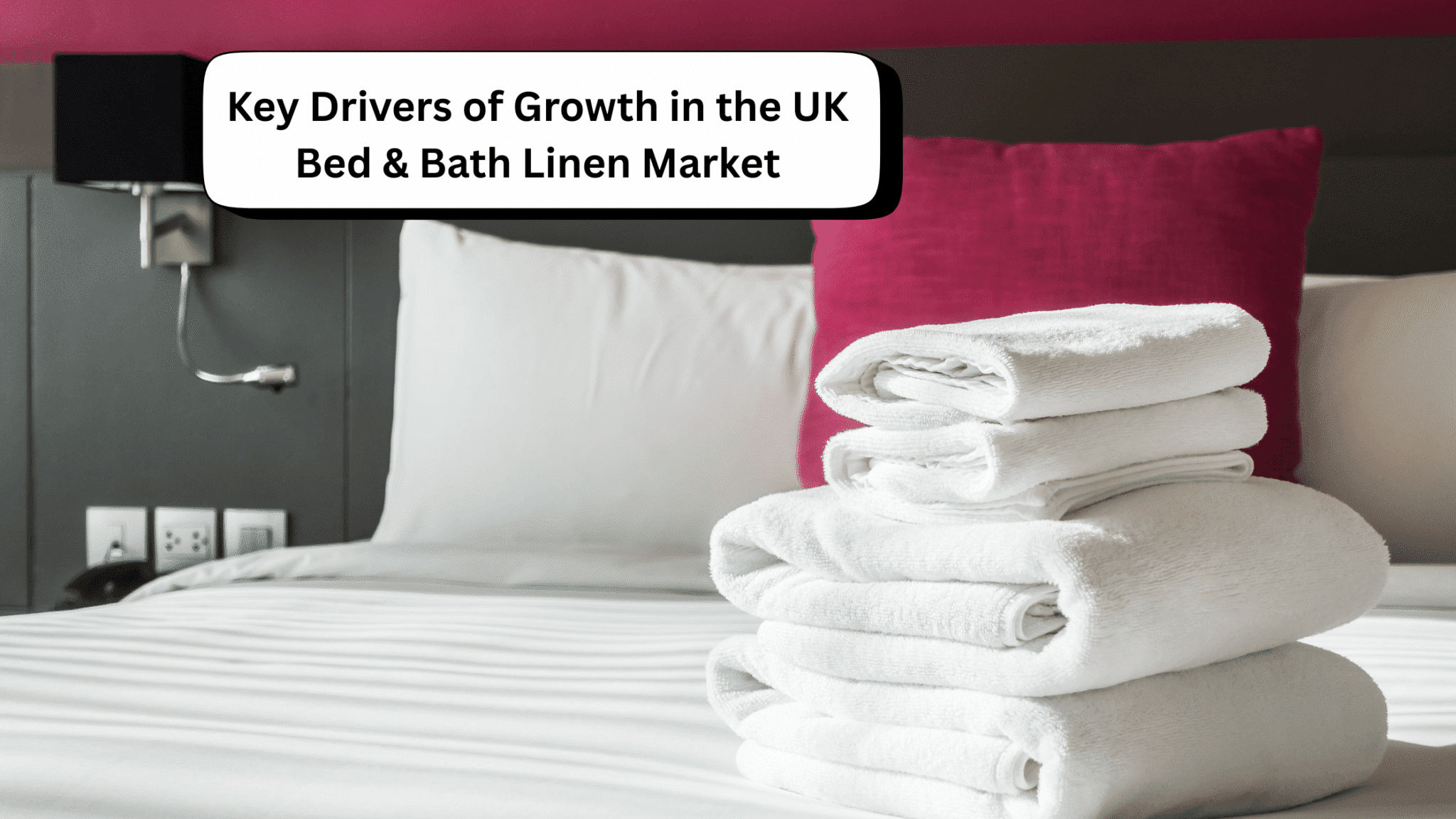
Linen plays a very important role in hotels, short-term rentals, and related accommodation businesses. It is a strong and breathable fabric made from flax and is commonly used for bed sheets, towels, drapery, bathrobes, and other related applications. The demand for commercial linens is on the rise. Cognitive Research revealed that the global hotel linen market size will increase at a compound annual growth rate (CAGR) of 4.30% from 2024 to 2031. This indicates growing demand for both hiring and wholesale purchase of linen items. A report from Mordor Intelligence also revealed that the bath and linen market in the United Kingdom stands at $5.44 billion in 2026, and it is expected to reach $7.50 billion by 2030.
The Mordor Intelligence report further revealed that bed linen commands the largest share of the overall demand for linen products, accounting for about 63.27% of the linen market. This is because sheets and pillowcases are replaced more frequently than other textile product categories. Bath linen is also on an upward trend, as commercial sectors such as gyms, spas, corporate offices, healthcare facilities, yoga studios, restaurants, beauty salons, and event venues are now refreshing towels to meet stricter hygiene standards.
Linen purchases are split between consumers and businesses. Some companies prefer purchasing linens outright rather than hiring them on a recurring basis. This article focuses on the key drivers behind commercial purchase and/or rental of linen products. The residential customer segment makes up about 68.33% of the UK’s linen market, while the commercial sector accounts for the remaining 31.77% and is expected to grow at a 6.16% CAGR between 2025 and 2030. It is not surprising that commercial demand for linen is expected to grow over the next five years, which brings us to the key drivers for this growth.
Key Drivers of Commercial Bed and Bath Linen Growth
- More luxury hotels under construction in the UK
Investment in the luxury hotel sector in the capital is on the rise. London currently has around 9,300 rooms under construction, set for completion by 2026. Some of the hotels in the supply pipeline include Chancery Rosewood, Six Senses London, Mandarin Oriental Mayfair, and Park Hyatt London River Thames. - Importance of NHS infection-control protocols for healthcare linens
The NHS has issued guidelines for healthcare laundry management under HTM 01-04, a memorandum focused on the decontamination of linen for health and social care. Healthcare workers are encouraged to perform hand hygiene before handling clean linen and to remove clean linen from plastic bags before storage to prevent bacterial growth. - Growth in the health and fitness sector
Despite economic challenges in the UK, including unemployment, inflation, and high energy prices, membership numbers in health and fitness clubs have risen from 9.9 million in 2022 to 11.5 million in 2024. - Other contributing factors
Additional factors driving growth in the commercial bed and bath linen sector include:
-
- Increase in short-stay and Airbnb demand
- Rising hygiene expectations among guests and clients
- Expansion of PBSA (purpose-built student accommodation)
- Growing adoption of linen-hire models
- Frequent replacement cycles for commercial linen
- Familiarity with outsourcing cleaning and laundry services
- Increase in short-stay and Airbnb demand
The commercial bed and bath linen sector benefits from a dual model of purchasing or hiring linens at scale, which is crucial to providing guests with a positive experience. High-quality, clean, and well-maintained linen remains a key factor in guest satisfaction across hotels, student accommodation, healthcare, fitness, and short-stay properties.